
The Scent of a Woman: Memory, Etiquette, and the Invisible Signature
Scent acts as the most potent wizard of memory, defining a woman's intimate signature and embodying a subtle etiquette where a fragrance is discovered, not announced, making it the most loyal and unforgettable form of remembrance.
There are moments in life that exist only in scent, when a single breath can carry you across time and place. One whiff of perfume, a candle, or a familiar room, and you are elsewhere: lifted from the present and set gently in another memory. Helen Keller called smell a “potent wizard”, and she was right. Scent can cross oceans, years, and states of being. It is the most loyal of our senses; it never forgets.
At Christmas, the world itself becomes perfumed. The air is filled with pine and candle wax, orange peel and mulled wine. A hint of brandy and spice lingers on the skin, the faintest trace of perfume on a fur collar, the smoke of turf drifting from the fire. It is a season that smells like memory.
For me, that memory is always my mother, her Yves Saint Laurent Opium, rich with amber and clove, caught in the lining of her fur coat as we walked to midnight Mass. I would bury my face into her shoulder, breathing in the scent of her warmth, candle wax, incense, and perfume. Even now, if I catch Opium in the air, I am there again, small, safe, and tired in a pew, half asleep beneath the murmur of prayers and the rustle of coats, her perfume rising like a lullaby through the candlelight.
Perfume, more than fashion or jewellery, defines a woman. It is invisible yet unforgettable, an intimate signature that lingers long after she has left the room.
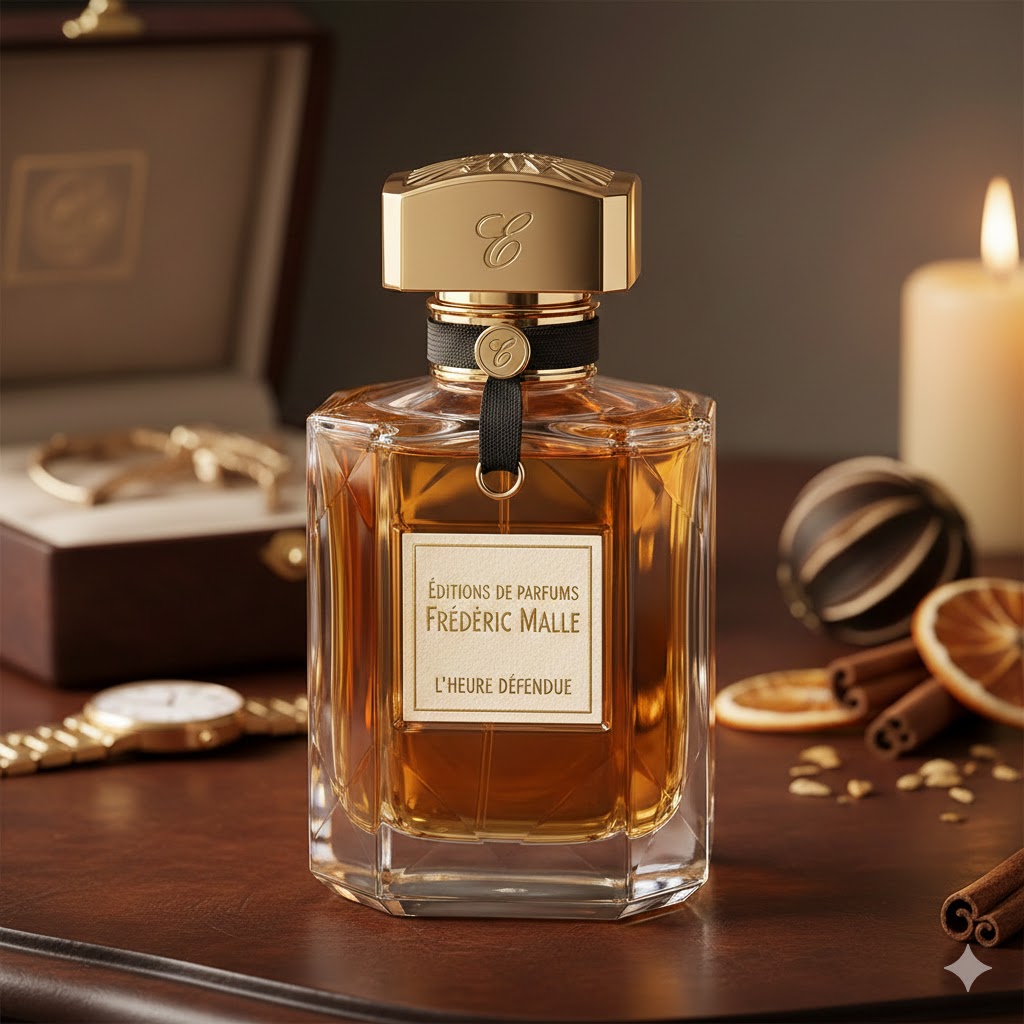
My own scent story began nearly fifteen years ago when my husband read about Éditions de Parfums Frédéric Malle in the Financial Times. He ordered a bottle, not knowing it would begin a quiet love affair that still continues. I have worn it ever since. The name I keep to myself, but the scent feels like my second skin. I feel undressed without it. The bottle, the black box, the scent itself, all bring me a small, private happiness.
Scent has a way of joining the fragments of life, stitching memory to emotion in a way nothing else can.
I can smell a candle and be back in San Francisco, visiting my sister in Mountain View, the air heavy with rain and the soft sweetness of wood chips. In France, the sun warms the lavender fields, the hum of bees rising through childhood laughter. The aroma of strong Italian coffee at breakfast follows me down narrow streets, dark, insistent, and alive. The peat smoke and wine of my father’s home in Arigna wrap around me, the warmth of fire and laughter curling through the dusk.
Even the sharp, clean scent of bleach and polished wood that takes me back to school corridors blends seamlessly with the soft heat of summer and the faint sweetness of cigarettes in 1985, when school ended and freedom stretched ahead like an open road.
Writers have always understood this power. Proust famously wrote of a moment when the taste and smell of a small French sponge cake, a madeleine dipped in tea, suddenly transported him back to vivid childhood memories, the sights, sounds, and feelings of a long-forgotten morning in his aunt’s house. It is the quintessential example of how a simple scent or taste can unlock memories with remarkable clarity. Virginia Woolf wrote of moments so vivid they seemed to exist outside of time, and Colette believed that scent could be carried in the heart long after it left the skin. Scent is our truest form of remembrance; it resists forgetting.
In Grasse, the home of French perfumery, this magic begins each dawn. The fields there are filled with rose centifolia and jasmine, harvested by hand while the air is still cool. Each petal carries its own secret, its own story. Perfumers blend them like composers, weaving top, heart and base notes into harmony. The top notes are the sparkle, citrus, green, or bright. The heart holds emotion, rose, iris, or spice. The base is the memory, musk, sandalwood, amber, the quiet persistence that lingers after the woman has gone.
There is etiquette in perfume, just as there is in conversation or dress. A true scent should be discovered, not announced. One never enters a room before one’s fragrance does, nor leaves it hanging behind. The art lies in restraint, enough to be remembered, never enough to overwhelm.
Coco Chanel once said, “A woman who doesn’t wear perfume has no future.” Perhaps what she meant was that perfume makes visible what is unseen, the confidence, the intimacy, the grace we carry within us.
Perfume changes on every skin, becoming part of a person’s chemistry, their story. The same fragrance that feels daring on one woman may become soft and melancholy on another. This is its most intimate power; it belongs only to you once it touches your skin.
Christmas itself is a perfume, the brightness of orange and frost, the warmth of clove and brandy, the deep hush of pine and smoke at the end of the night. When the guests have gone and the candles burn low, there remains that faint perfume of the season: laughter, love, and time caught for a moment. The sweetness of orange peel drifts into the warmth of fur collars, into the lingering smoke of turf, folding memory and scent into one, until even the quietest corner of a room hums with it.
So this Christmas, when you dress for the evening, pause a while. Lift the bottle, breathe in, and let the scent unfold. It is your invisible adornment, your finishing touch before stepping out into the cold. For when the music fades and the fire dies, it is your fragrance that will linger, on a scarf, in a room, in the folds of memory.
Perfume is what we wear; it is who we are, distilled.