
Interview with Rob Hackett: Sleight of Hand and the Memorised Deck
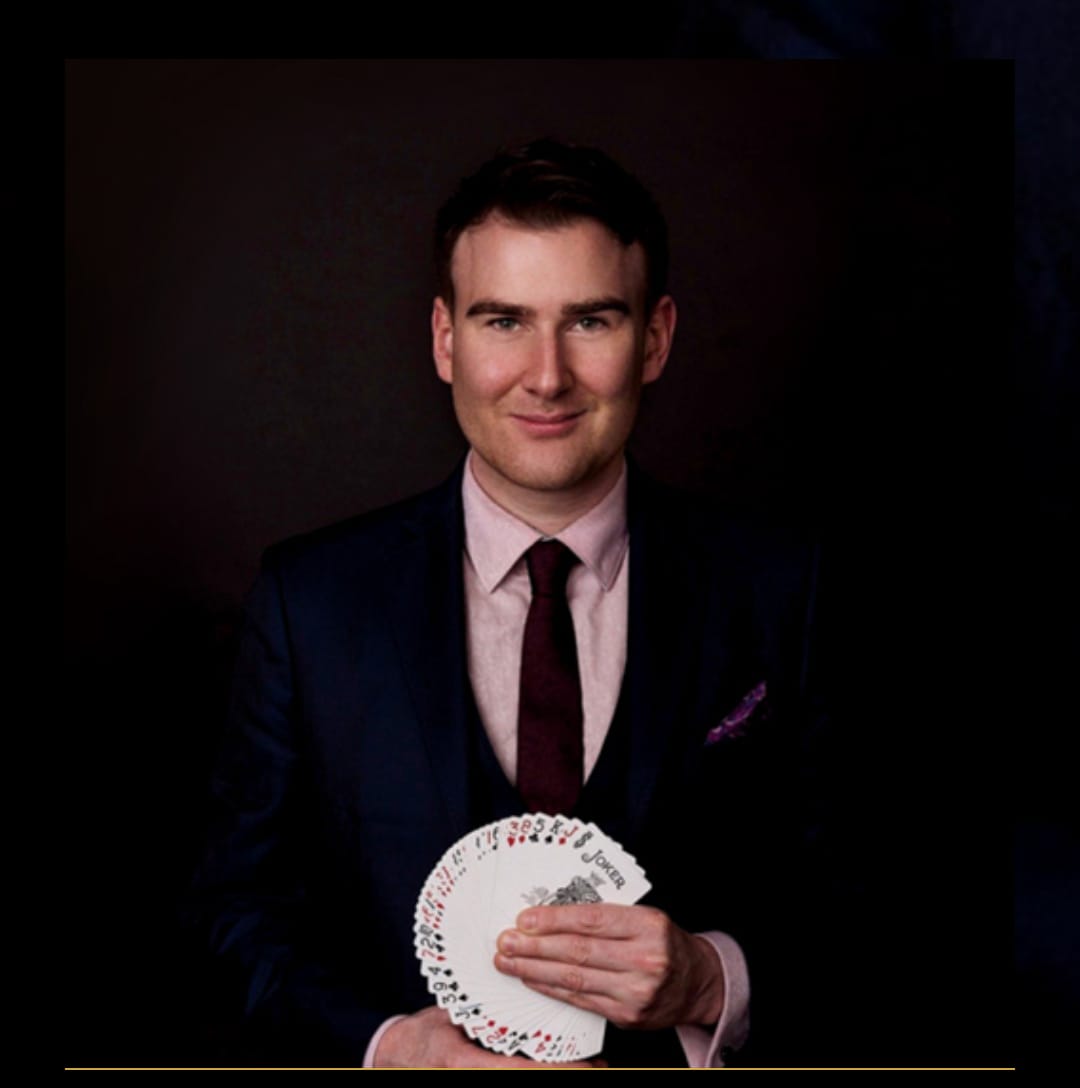
We are delighted to interview the wonderful Irish magician Rob Hackett.
What first inspired you to make magic a part of your life?
I first discovered magic at the age of eight when I was gifted a magic set for Christmas. I was immediately intrigued and curious about what each prop was used for; not having all the answers only added to the mystery and the allure.
Later that same year, I visited my Aunt Helen, whose son, Peter, was already an amateur magician. His knowledge blew mine out of the water! When he showed me a few routines, billiard balls appearing and disappearing, cards transforming, and other incredible sleights, my eyes literally popped out of my head. I was completely baffled at what I saw. Peter showed me a few of the necessary sleights, and I was determined to master them. I practiced relentlessly on babysitters, neighbours, and relatives, anyone who would watch and put up with my annoying questions about magic.
Magic had certainly entered my life, but it hadn't completely taken over... yet. As I went through my teens, I discovered music and started playing the guitar, so magic took a back seat. It was always present, but my focus shifted entirely to honing my musical skills.
Fast forward to the age of eighteen: I had completed secondary school and was on my way to college to study Computer Applications at DCU. It was here that I re-sparked my love for magic. I performed a few impromptu tricks for new college friends, and their intense, unexpected reactions served as a turning point. I found myself learning new tools and techniques, often spending more time diving into new routines and techniques than I probably should have on my actual studies! College provided the encouragement and interest I needed to commit to magic seriously. Magic provided a unique skillset on campus, especially since only one other student shared the interest. Crucially, this coincided perfectly with the internet's explosion. This was the era of Bebo and early social media, and suddenly, magic props, tutorial downloads, DVD sets, and fresh tricks were widely available online. I was absolutely hooked on the possibilities.
Your performances are known for blending skill, charm, and storytelling. How do you craft a magical experience that captivates your audience, especially during the festive season?
I’ve learned that I can’t perfect this alone. I actively seek honest feedback, regularly running concepts, new jokes, a line of patter, or a presentational hook past both my magician colleagues and, crucially, my non-magician friends. They offer those vital "home truths" about what genuinely connects with an audience.
I’ve attended Storytelling Festivals to truly understand the architecture of a captivating narrative. This dedication extends to regularly listening to podcasts on everything from comedy and storytelling to public speaking and elocution, ensuring my delivery, diction, and tonality are always clear, crisp, and engaging. Magic can be a bit of a bottomless art form - you truly never stop learning or striving to be better. Sometimes, a crucial change to an existing routine only occurs years later; it can take a while for the penny to drop! But it’s through the act of doing that we improve.
The audience, in a way, is the best teacher. They tell us subconsciously what’s wrong: Why didn't that line get a laugh? Why wasn't the reaction to that vanish strong enough? My job is to observe those reactions and subtly adjust, ensuring that every time I perform, I'm offering a fresh and genuinely engaging experience.
Sleight of hand and illusion take years to perfect. Which trick has challenged you the most, and what keeps you passionate about your craft?
One of the hardest things I've tackled in magic hasn't been a trick, but rather a foundational system that has taken over a decade to hone. This system is the Memorized Deck, a concept developed by the legendary Spanish card magician, Juan Tamariz. I was first introduced to his work many years ago when Tamariz, who is arguably one of the best card magicians in the world, gave a lecture and a five-hour workshop in Ireland. His influential book, Mnemonica, details this principle where a performer memorises the exact order of a shuffled deck. While that sounds cryptic, it's deliberately so! The true magic lies in the improvisation it allows. For example, a spectator can merely think of a card and name it aloud, and the magician can immediately produce that card from their pocket, or have a spectator cut directly to it in the deck. The great challenge is the improvisational nature of the system. You genuinely have no idea which direction the routine will go until the spectator names their card. It’s pure "jazzing." This constant demand for real-time thinking and adaptation is precisely what keeps the process fresh, keeps me on my toes, and, ultimately, keeps me deeply passionate about the craft. It's learning that never really ends!
Magic is about creating wonder and emotion. During your shows, what feeling do you most hope to leave your audience with?
Ultimately, the feeling I hope to leave my audience with is a sense of pure, genuine entertainment. My primary goal is not just to fool them, but to ensure they enjoy the ride, the fun, the journey, and the connection we build along the way. I want the audience to feel a mixture of emotions all at once: to smile, to laugh, and to be truly amazed. I often find that a genuine smile is sometimes even more telling than a burst of laughter. People will laugh at anything they find genuinely funny, but they will only give you a true smile if they feel a connection and they genuinely like you. In the end, I want every person to walk away feeling like they shared in a fun, surprising journey and that they are left with a lasting sense of happiness and wonder. That's the real magic.
Christmas brings a special kind of excitement. Do you have a favourite holiday-themed trick, or a memorable festive performance that still makes you smile?
Yes, Christmas time definitely brings such a unique, sparkling kind of excitement, doesn't it? Magic feels so perfectly at home during the holidays because both are rooted in wonder, anticipation, and making people smile. I absolutely try to capture and incorporate that beautiful feeling of nostalgia and fun that Christmas brings into my performances. While I don't always pull out specific holiday-themed tricks, the spirit of the season is easily woven into the presentation.
I spend a lot of time working corporate Christmas parties, and those settings are perfect for weaving in a bit of genuine, festive spirit. My favorite way to do this is by turning a miraculous moment into the act of "gifting" a spectator an unexpected early present. It's a very warm, human way to connect with the holiday generosity.
For instance, that "gift" might be their own watch, which they swore was on their wrist just moments ago, suddenly reappearing in a completely unexpected place! Or maybe a signed card they placed back in the deck magically appears, sealed inside an envelope that had been safely tucked deep in my wallet the whole time. So, while the routine itself might be a classic, the patter and festive language I use brings in that Christmas spirit. It just enhances the whole performance, making the magic feel like a wonderful, shared moment of holiday cheer.
Over your career, have you ever witnessed a reaction from an audience that surprised or delighted you in a magical way?
Yes, absolutely. While I've witnessed the full spectrum of expected reactions from laughter and gasps to the occasional emotional tear (both of joy and of deep reflection) it's the genuine, unexpected responses that truly stick with you. A recent performance for a non-profit health organisation, really stood out. The audience's reactions were raw, heartfelt, and deeply moving. It served as a powerful reminder that we sometimes take for granted the simple, genuine emotions and connections in life. Magic, in its purest form, has the ability to ground us, reminding us that the most valuable things like love and laughter are also the simplest. So, to answer your question, yes, I am delighted to receive all the emotions that a particular person is feeling in the moment, and I am a facilitator to ride those emotions with them.
For anyone hoping to learn magic, what advice would you give about balancing skill, creativity, and personal flair?
The pursuit of excellence in magic is about defining your authentic presence. The goal for me isn't to be a "captivating" figure, but to be an effective communicator who uses magic as a medium. This process involves shifting your effort from perfecting mere technique to developing a unique personal voice fueled by creativity.
I believe that your path in magic begins with looking inward, identifying the passions and interests that define you outside of magic and weaving those themes into your routines. This ensures your performance feels genuine, making it easy to discard the temptation to imitate others. Allow your other hobbies and/or interests to reflect in your own magic, enhancing its authenticity.
Your presentations must prioritise emotional connection. By using storytelling to give your magic emotional weight, you transform technical feats into shared, meaningful moments of wonder. Humility and constant self-assessment are key; seek honest feedback to polish your persona, ensuring your character is a refined, genuine, and a compelling version of who you truly are.
Hackett Magic website