
The Perecian Gaze: The Infraordinary and the Photographic Act Writer and photographer Kelly McErlean considers Georges Perec's concept of the infraordinary as a literary mandate to document the unnoticed details of everyday life, mirroring the documentary gaze of photographers including Daniel Meadows, to reveal the deepest reality not in the spectacular, but in the habitually overlooked.
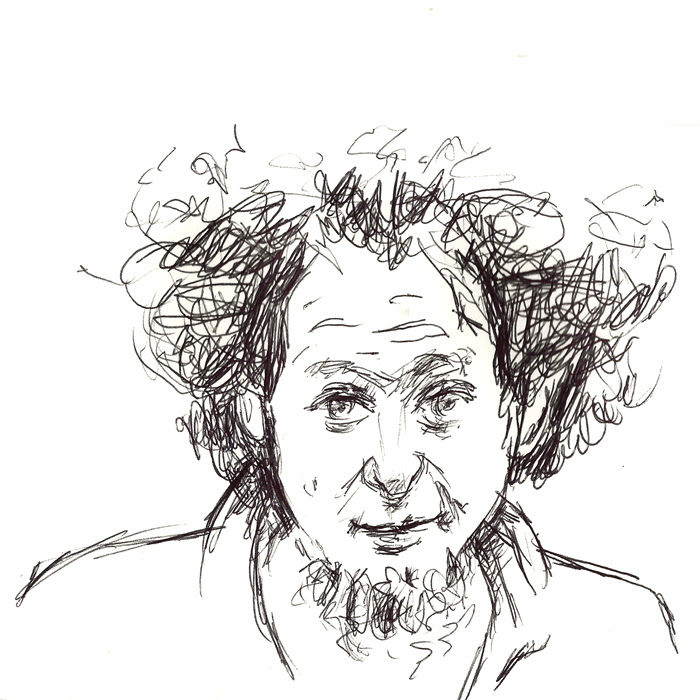
Georges Perec, a pivotal figure in 20th-century French literature and a member of the Oulipo group, built his oeuvre upon the deliberate examination of the seemingly meaningless fabric of daily existence. His most defining contribution to this field is the concept of the infraordinary—a term he coined to denote that which is so ordinary, so habitually present, that it becomes invisible. This analysis explores the nature of the infraordinary, details how Perec’s literary projects attempted to document it, and argues that his writing methodology fundamentally mirrors the documentary and isolating power of photography.
The infraordinary is the inverse of the extraordinary, rejecting the sensationalism of news and grand events. In his text, "Approaches to What," Perec challenged readers to describe the color of their kitchen floor or the details of their apartment building—things we look at every day but do not truly see. This act of seeing is precisely what the infraordinary demands: a radical suspension of habit to recover the presence of the unremarkable. It is an acknowledgment that life is constituted by these unnoticed "non-events," and that to ignore them is to ignore the bulk of human experience. Perec sought to make visible the background noise we filter out for the sake of efficiency.
Perec’s literary projects became systematic exercises in this exhaustive observation. Species of Spaces is an architectural inventory, moving from the page to the bed, the room, the apartment, the city, and the world, capturing the quotidian geometry of human habitation. His most famous experiment in the infraordinary is the Tentative d'épuisement d'un lieu parisien (An Attempt to Exhaust a Place in Paris), where he spent three consecutive days documenting everything that happened in the Place Saint-Sulpice, excluding anything deemed "interesting." The resulting catalogue of buses, weather changes, people waiting, and dogs walking demonstrates the intense, almost manic effort required to capture the totality of the mundane.
This project is where Perec’s work converges with photography. Like a documentary photographer such as Daniel Meadows, who spent decades chronicling the lives and commonplace environments of ordinary British people, Perec established a stationary gaze ("the camera's stillness") and allowed the transient elements of the world to flow through his frame. Meadows’s project to photograph the same subjects across decades highlights how the infraordinary evolves over time, mirroring Perec’s meticulous commitment to capturing daily shifts. Photography, in its essence, turns a fleeting, infraordinary moment—a shadow, a crease in a curtain, a specific arrangement of objects—into a fixed, isolated object of intense scrutiny. The act of documenting, of freezing the flow of time and space onto a two-dimensional plane, forces the viewer to acknowledge the significance of the utterly trivial. Perec’s language, meticulously listing and cataloging without judgment, functions as a textual equivalent to a photographic negative, dedicated to preserving verifiable, ephemeral data.
Georges Perec’s obsession with the infraordinary provided a literary mandate for exhaustive inventory. His writing, through its systematic dedication to documenting the unremarkable details of the everyday, successfully transforms the unseen into the seen. His methodology, in effect, serves as a high-fidelity literary form of documentary photography, asserting that the deepest reality of human life is contained not in the spectacular, but in the enduring, quiet presence of the habitually overlooked.