
Interview with Paul Doorly
For over two decades, Paul Doorly, co-founder of DTR Architects with his partner Maria Jesus Carnicero, has been creating homes and spaces that are as thoughtful as they are beautiful. At DTR Architects, every project is an exploration of how people live, gather, and move through the spaces they inhabit, bringing together intelligence, imagination, and a quiet sense of elegance.
In this interview with The House of Etiquette, Paul reflects on the experiences that shaped him from childhood tree houses to modernist buildings that captured his imagination and shares the principles that guide his work today. He speaks about designing for daily life as well as for social gatherings, the materials he values, and the small details that transform a house into a true home.

1. What first made you want to be an architect. Was it a place, a person, or a
moment that inspired you?
I can only answer this in a slightly roundabout way; ‘Quelle surprise’.
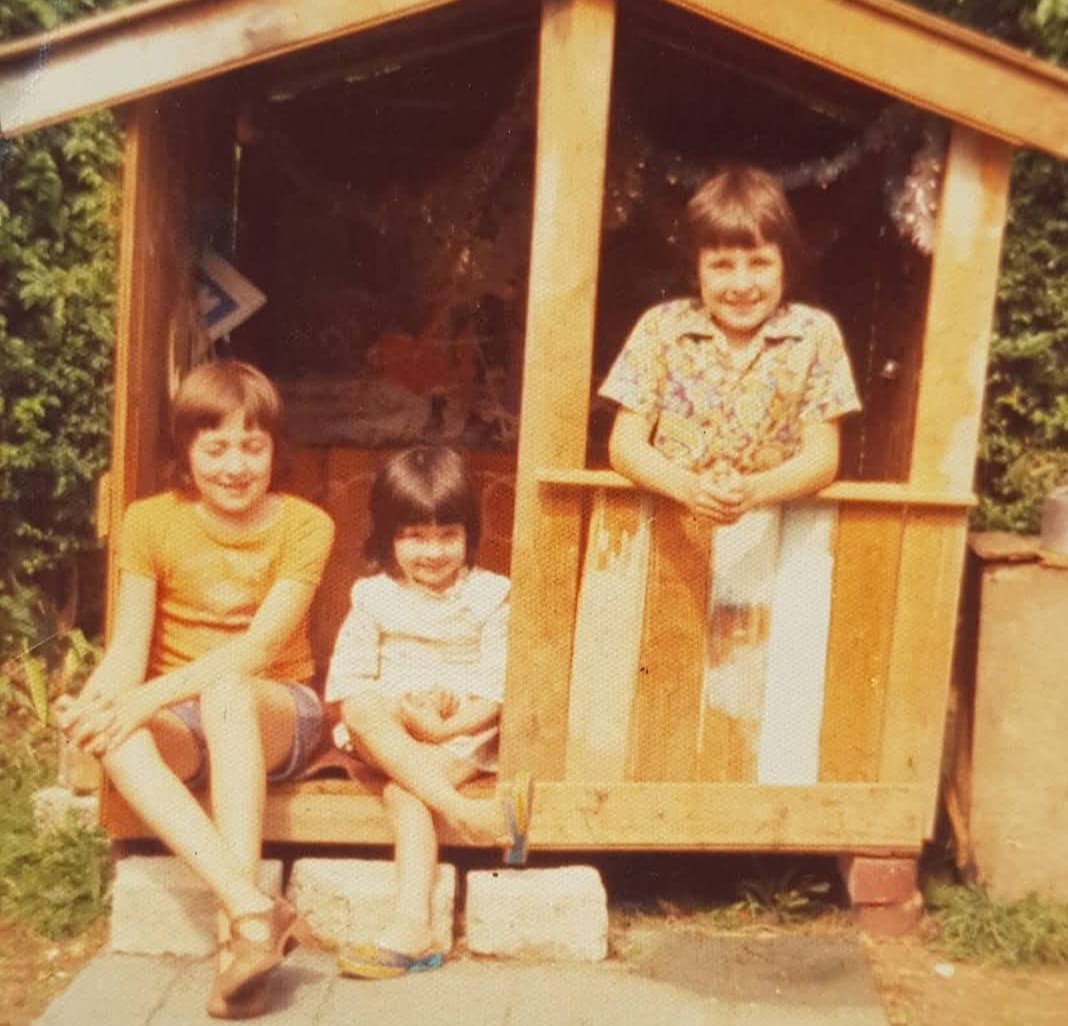
As a kid, I remember very well how impressed I was when Dad built a tree house out of
pieces of timber and boarding from the garage. Helping him I could see how he was
designing as he was making and assembling this structure. There was a touch of magic
about this ability, to take bits and pieces of material, select them, cut them, fix them into
place and end up with a very solid platform with walls and roof all constructed up in a tree.
A number of years later, when the tree house had lost it’s fascination, it was removed,
reworked and recycled into a small play house in the back garden. Wow!
He also made an aviary out of bits of timber from the garage with chicken wire which he
painted black in order to disguise it and make it less visible. Inside there was a fish pond, a
rabbit hutch and small houses for birds.
At the same time, this was between the ages of six and twelve, Dad showed me how to
construct a one point perspective; a country road disappearing into the horizon, with
telephone poles diminishing in size with cables strung between and birds gathering getting
ready to leave for the winter. It seemed incredible that you could create an illusion of depth
from a flat piece of paper.
The final memory I would add to the above, was going into the office where he was a
partner in a small engineering and architectural firm in Blackrock main street. I loved the
drawing boards, the swivel stools, the T-squares, retractable pencils and electric
sharpeners; these were all the tools needed to draw buildings which would then be
constructed. It seemed enjoyable and doable and I liked the atmosphere of the office.
The group of people working there were very friendly and had time to have a little chat and
give me some sweets, show me how to make a paper plane, or how to keep the take away
chips I had warm. (you tuck them under your shirt, pull you jumper over them and tightly
close your jacket around them, in case you are interested. Keeps the chips warm, but your
clothes will stink of vinegar for days after).
All of those experiences did not really clarify to me that I should study architecture, but a
seed was sown that somehow remained over the years. When I finally decided to go to
university at 27, it was more to do with with accepting that my dream of being a rock n’ roll
guitarist was not likely to happen and also accepting that I did not want to continue
teaching english as a foreign language. I still hadn’t decided what I wanted to do, but for
some reason, architecture beckoned and I thought, well why not give it a go?
2. Can you remember a building from your childhood that amazed you?
I am not sure I was really amazed by buildings when I was younger, but I really loved the
house we had in Eaton Square. It seemed ideal; plenty of space inside with a big garden
and shed out the back and a very short front garden with communal square over the road.
I have always loved the arrangement of houses around a square with a direct connection
to the street and passers by, as opposed to a long front garden which keeps everything at
arms length.
It meant that I could sit at the door step and watch the neighbours or chat to my mates
etc.; what Van Morrison describes as a ‘dweller on the threshold’, you could participate or
observe, and were neither at home nor outdoors. This square connected to Belgrave
Square, which was on a larger scale with wider roads and taller houses, but the same type
of arrangement.
I think this pattern of smaller communities around a common space, connected to larger
communities is one that has a special attraction to me. I have never really found the
appeal in long streets of identical houses with no gathering places. I find housing estates
of identical houses arranged in convoluted patterns very disorientating and somewhat
suffocating.
I would also mention the Berkeley Library in Trinity College. For some reason, this made a
very strong impression on me when I was in my early teens. I remember going there to
see a show of Andy Warhol’s polaroids with dad when I was around twelve. I remember
entering through Nassau Street, and suddenly you are surrounded by the building, in a
compressed alleyway, and then you come out to the bright, grassed courtyard with the
Trinity Campus beyond, and I thought that was brilliant, it felt like you had somehow snuck
in the back way.
It also looked so hard edged and unique; raw concrete and bold simple shapes. There was
a very different atmosphere about it to the rest of Dublin which was mainly brick. The
gallery inside was a surprise as well; very quiet and spacious, almost church like with
people whispering. The Warhol show was amazing, I had never seen photographs
assembled in that way, like short films that you could keep replaying in different
sequences.
The ‘New’ Library, as it used to be called, by Ahrends, Burton & Koralek is still one of my
favourite buildings. About thirty years ago I was lucky enough to visit Richard Burton’s
house in Kentish Town and get a guided tour by him; he was a remarkable architect and
storey teller; he could elaborate on every detail, junction, material choice and arrangement
and connect it to a wider philosophy, a personal anecdote or a technical observation.
I would also add that Scott Talon & Walker’s restaurant building in UCD, Stephenson
Gibney’s Merrion Hall offices on Sandymount strand and their Central Bank on Dame
street, all stood out for me. They seemed to indicate that another Ireland was possible,
free of the influence of both Britain and the Church. A future that was modern, positive and
urbane.
I loved the great Georgian Squares in Dublin. The uniformity of the simple brick walls with
beautifully proportioned windows and simple stone steps leading up to colourful doors, are
still beguiling and encapsulate a Dublin that I remember.
The final building I want to mention is the Gardiner Street Church. We used to go there for
the nine days of the novena to St. Francis Xavier every year. The church is designed in a
high classical style from the Victorian era, and to see it packed out with the smell of
incense, the organ filling the space with sound and everybody singing hymns was
incredible. I still love churches and visit them very regularly, but there is something about
the experience of Gardiner Street in the seventies that is rarely matched.
3. When you imagine designing a home, do you think more about daily life or the
times people gather there?
The majority of projects that Maria and I undertake are residential; either houses or flats
for developers or for homeowners. Occasionally, we will design a new development, but in
recent years we have worked on existing buildings; extending, renovating, adapting and
upgrading them.
Our starting point is always a careful survey of the existing building, the site and the
adjoining properties. We walk about the area to get a feel for the ‘lay of the land’, in
particular, we will record typical details or features of surrounding buildings, unusual or eye
catching features, elements that seem successful, materials etc.
What we are trying to absorb in the survey, walkabout and subsequent preparation of the
set of drawings as existing, is an overall understanding of the property and the context,
before we really begin to consider how we might design alterations and extensions. A
good understanding of the path and angle of the sun at various times of the year is
fundamental.
Combined with all of the above, we need to bear in mind the client' brief and requirements,
and the planning regulations and policies that apply to the site.
A resolved design needs to perform well in terms of it’s basic functions. Often much of our
work is not visible and is buried in the construction of the building envelope, however, just
because it is out of sight does not mean it is out of mind. Successful buildings, and
particularly homes, must be; structurally sound, warm, draught free, well-lit and ventilated,
easy to maintain, acoustically pleasant, with great views, simple circulation etc. as a basic.
On top of this, they must also operate well on a daily level and be adaptable for larger
gatherings, whether that be a dinner party or a child’s birthday party.
So when you ask, ‘do you think more about daily life or the times people gather there’, I
would answer that we think of both, a good home should really ‘disappear’ into the
background and enable the users to get on with their lives in the most enjoyable and
practical manner as possible.
4. If money and physics were no problem, what unusual feature would you love to
include in a home?
Many very wealthy people in London have created multi-level basements to incorporate
home gyms, saunas, swimming pools, cinemas and large wine cellars. If you had the
money and staff to maintain all of this, I suppose, it might be nice, but I have never really
seen the appeal. At one stage, they might have been considered unusual, but possibly not
now.
What has caught my eye in the last few years are what might be called ‘winter gardens’.
Essentially, they are spaces created around the exterior of a building, which are wrapped
in lightweight translucent or transparent materials, to create a sort of intermediate space
between the insulated and sealed interior of the home and the fully exposed exterior.
When designed well, they provide a fantastic, casual space for plants, airing clothes,
painting or crafts, ‘outdoor’ dining etc.
There are a number of projects by an architectural practice in France called Lacaton and
Vassall who specialise in these types of inside/outside spaces. They have created them
both for individual houses and blocks of apartments, and seem to work extremely well, and
create a new connection between the home and it’s surroundings.
5. Is there a material or design you secretly dislike, even if it is fashionable?
Often we have long discussions with clients about ‘open-plan’ designs versus ‘closed-plan’
layouts. Many people see the pro’s and con’s with each approach, but don’t quite know
which way to go for their home.
I fully understand this, and there really is no universal correct answer. However, I think the
way we live now tends to suggest that a more free-flowing and connected series of spaces
works better than several separate rooms.
However, what I really dislike are poorly considered and badly designed open plan spaces.
At their worst, they can be chaotic, disordered, noisy spaces that neither function well as
one thing or the other.
What we often find works best are ‘broken plan’ spaces. These are designs where each
function; kitchen, dining area, sitting area etc, are clearly laid out, and through the use of
more subtle separation for example; materials, lighting, colours or screens, distinct zones
are created within an open-plan space. Circulation routes also need to be well
understood, though not necessarily clearly expressed.
Wherever possible, if an open-plan arrangement is used, it is essential that a separate
utility room with washing machine and storage is included. Ideally, as large as possible, to
avoid unnecessary visual clutter, and acoustic irritation.
Carefully designed free-flowing spaces that connect to the outside are a real benefit to
family homes; badly designed extensions create chaos, conflict and stress.
6. Has a project ever surprised you, perhaps changing how you see people or the
way they use space?
The first project that really caught my imagination when I was studying the degree was a
temporary house that Walter Segal designed for himself and his family, while his main
house was being extended and renovated.
In order to save money, he designed a very simple timber house using materials as they
were sold in the builder’s merchants. The idea was that these materials could then be cut
down to size and used in the main house, or sold on to contractors for use in their own
projects. It turned out that this temporary home attracted a lot of attention and interest from
the press and many detailed articles were written about it; the main house was largely
ignored!
Segal had stumbled upon a simple, economical way to build a modern house that required
basic skills of assembly as opposed to sophisticated construction skills.
It proved so popular that a number of clients came to him for designs of holiday homes
based on this method. Ultimately, Lewisham Council gave land to number of community
groups who wanted to build their own homes using this method.
I have visited two of his schemes, Walter’s Way and Segal Close, a number of times over
the years, these communities are now very well-established and successful. The homes
have been adapted and upgraded to improve the thermal efficiency etc, but the basic
layouts remain the same.v
Segal's wisdom was that if you can teach someone to cut a straight line and drill a straight
hole, they don’t just learn to build a home, they get the confidence to build a life and a
community! That is the real potential of architecture; it is world changing. There are still
vital and relevant lessons to be learnt from Segal.
7. In your experience, do some rooms like a dining room or hall still have quiet rules
about how people behave?
I think etiquette in the home is constantly evolving, as do the codes of behaviour in wider
society. However, the core of etiquette includes good manners and politeness, and these
are qualities that endure; respect for, and consideration of others will always be the
foundation stone of a civilised society. Of course, this does not mean that we need to
agree on every issue, or that we cannot express ourselves honestly and passionately,
however, it does mean that at the core there is respect for people and a recognition that
there are boundaries that should not be crossed.
I think the finer details of etiquette will always be tested, contested and challenged; which
is where a lot of great humour, drama, writing and art comes from. However, I think social
media is presenting an unprecedented challenge and threat to accepted social noms and
codes. I have faith that the qualities of respect and consideration that enable humans to
interact in a civilised manner will remain.
As regards rules about how people behave at home, I suppose this is often most apparent
in the way people behave towards guests. Some people have the ability to create a sense
of warmth, and a welcoming atmosphere which enables a house to transcend its physical
limitations, as Dylan wrote in The ballad of Frankie Lee and Judas Priest
“What kind of house is this,” he said
“Where I have come to roam?”
“It’s not a house,” said Judas Priest
“It’s not a house . . . it’s a home”.
Isn’t that really what most people want; a place to feel secure and a shelter from the storm.
It is interesting that you mention the Hall. I think this is a part of the home that has really
been relegated to a purely functional area for hanging coats and grabbing umbrellas.
However, great hallways are very special spaces which have a transitional quality; neither
fully in the home or outside, and not committed to any of the activities that go on in other
rooms: Sitting room, Dining room, Bedroom etc. There is a sense of being between rooms,
on the border, at the threshold, which I find very appealing.
Great Hallways with fire-places, pianos, desks, staircases, draught lobbies to front doors
etc are some of my favourite places when I visit historic, national trust houses. Whenever I
design a large house for a client, I always aim to create a long view through the house
towards the rear garden, and a vertical view upwards through the house to a roof light and
the sky beyond, I think this elevates the entrance to a central position from which the
volume and extent of the property can be appreciated. It also connects the house to it’s
surroundings, which is of fundamental importance.
8. If you could redesign any famous building for fun, which one would it be and
what would you change?
I would be tempted to design a thatched roof for the White House with a peat fire burning
in the hearth and smoke wafting across the lawn, just to remind everyone that it was
designed by an Irish architect and that some qualities of humility, humour and warmth
should be retained.
More seriously though, I remember going to Dublin Zoo when I was young and feeling
sorry for the lions, they always looked so depressed in their enclosure. I know zoos have
evolved a lot since the seventies and that their role is now to educate people about
animals and the environment as well as protecting endangered species. The development
of digital cameras means we can now see animals in their natural environments.
However, I would redesign the Lion enclosure in Dublin Zoo to try and create a more
stimulating and enjoyable place for the lions, as well as a more exciting experience for the
visitors.
I remember going to London Zoo a few years ago with my son when they had just finished
the new ‘Penguin Beach’; the previous enclosure, known as ‘The Penguin Pool’, was
designed by Berthold Lubetkin and was an icon of the International Modernist Movement.
It was a beautiful looking structure with very elegant spiral concrete ramps leading down to
an elliptical pool. However, the penguins looked absolutely miserable and depressed
anytime I visited. They seemed to spend their time huddled together shivering on the
ramps.
The new Penguin Beach is a much larger pool with sandy beaches around and rocks that
the penguins can dive off. You can also see them swimming under the water, through a
glass wall; in fact, they are more like birds flying under the water.
When we visited there were no penguins huddling and shivering in a depressed state, in
fact, one little guy was attacking the zoo keeper’s sweeping brush, it did not want the
beach to be cleaned up. That is the power of great architecture; everyone feels at home
and secure and confident to express themselves.