
Costume Dramas, Etiquette, and the Thrill of the Forbidden Door
Etiquette does not make you boring. On the contrary it is the stage on which wit, audacity, and the occasional perfectly timed barb shine most brilliantly. To wield language with impact you do not need to shout, to bluster, or fling words like stones. You need timing, precision, and imagination.
Rules Are Made to Be Broken
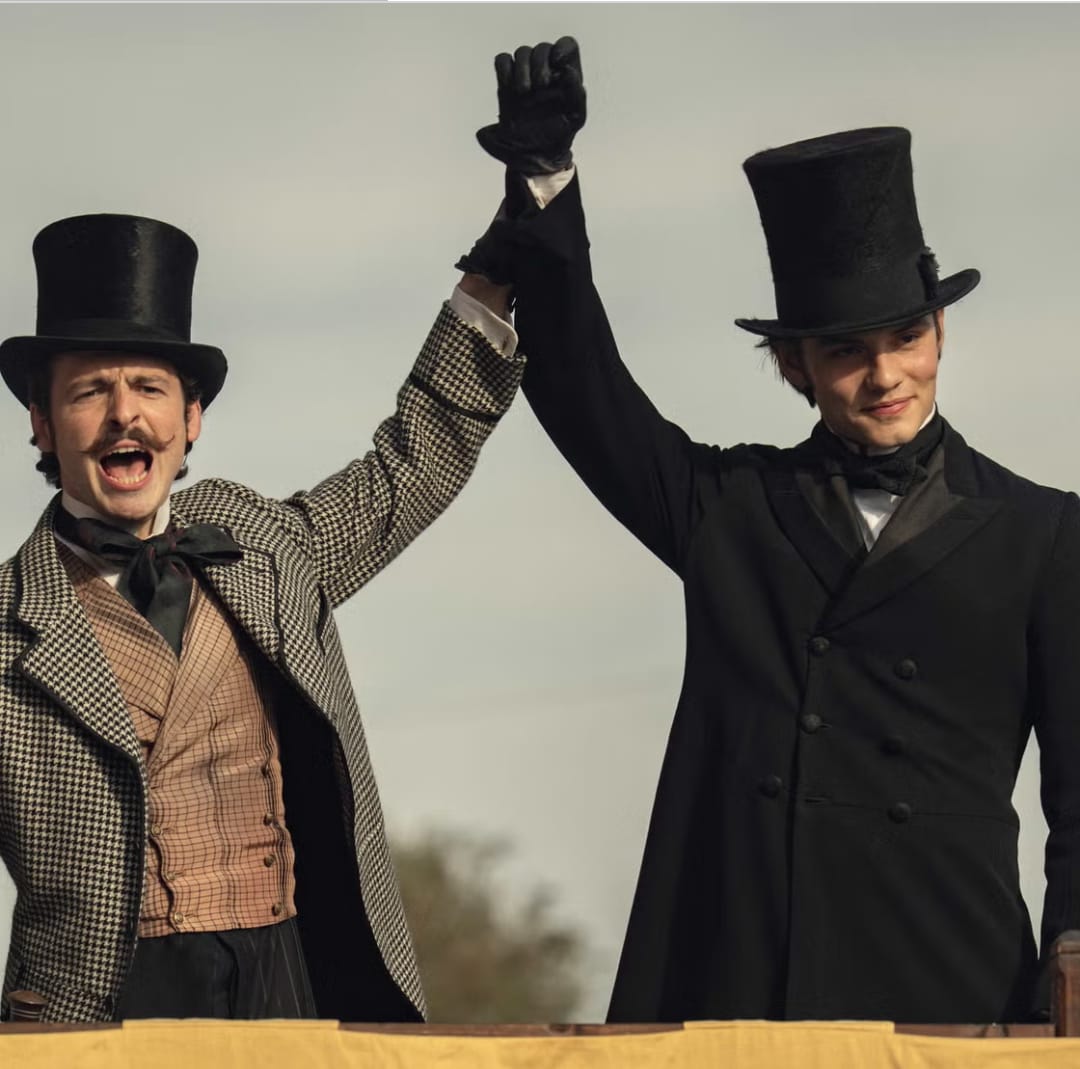
Permit a small indulgence: our peculiar and irresistible fascination with costume dramas. From the polished corridors of Downton Abbey to the smoke stained streets of Peaky Blinders, from Austen’s sparkling parlours to the intricate intrigues of The Crown, from the brazen excess of The Great to the quiet cunning of Gentleman Jack, and, most recently, the intoxicating world of The House of Guinness, a pattern emerges, one at once predictable yet endlessly entertaining.
At the heart of the matter lies the rules. How well we know them. The subtle choreography of introductions, the proper tilt of a hat, the delicate negotiation of precedence. Yet the moment the great doors close, the rules are often bent. Affairs flourish in secret corridors, fortunes are quietly gambled, and whispered alliances dissolve as quickly as they are formed. Downton Abbey tempers scandal with grace, Bridgerton flirts with impropriety at every ball, Peaky Blinders wields civility as a weapon before tearing it to shreds, and The House of Guinness demonstrates, with intoxicating elegance, how family duty, ambition and audacity intersect. One cannot help but lean a little closer when the whispering begins.
Who Will Rise, Who Will Fall
There is also the irresistible draw of aspiration and succession. Human beings are endlessly curious about who rises, who falls, who inherits, who triumphs or fails. Be it the crown in The Crown, the Bennet fortune in Pride and Prejudice, the sprawling empires of The Gilded Age, or the dynastic intrigues of The House of Guinness, these narratives allow us to indulge our fascination with power and status safely, from the comfort of our own drawing room chairs. One may observe, judge, envy, admire or shake one’s head entirely risk free. Occasionally one smiles knowingly when ambition tiptoes into audacity, fully aware that the law of human desire is unchanging.
A Feast for the Eyes
Equally compelling is the pleasure of the aesthetic. Gowns that shimmer as though lit from within, halls polished to perfection, silverware aligned with near maniacal precision. Even the smoky grit of Peaky Blinders has its own stark carefully composed elegance. These dramas are a feast for the eyes, reminding us that life can occasionally be artful, ordered and magnificent, even if only for a fleeting hour or two. A raised eyebrow at a cleverly folded handkerchief or the flash of a diamond can be as thrilling as any duel or whispered secret.
Watching Without Being Seen
Finally, these dramas offer a uniquely satisfying moral theatre. We watch with a keen eye as the rules are bent, negotiated or utterly shattered. We are audience, juror and sometimes conspirator, scandalised yet approving, delighted by audacity yet reassured by civility, complicit and yet entirely innocent. One observes and one judges, but never too openly, for discretion is itself a kind of power.
A glance across a crowded ballroom can reveal more than a thousand spoken words. The appeal is elemental: the interplay of etiquette and audacity, ambition and inheritance, art and transgression. It is a dance we recognise immediately, and wish, perhaps, we had the courage to join. For those who prefer discretion, the joy lies entirely in observation. One may witness the follies, the triumphs, the daring gambits of others, take careful note, and remain quietly in one’s corner, fully aware of human behaviour in all its elegance and folly, and enjoying the spectacle all the same. Occasionally, one allows oneself a small, private smile.